Roasted Winter Vegetable Bowls with Nutmeg Tahini
When winter rolls around, there’s nothing quite like a warm, hearty bowl of roasted vegetables to fill your home with comforting aromas and vibrant flavors. This recipe for Roasted Winter Vegetable Bowls with Nutmeg Tahini is not only nourishing but also simple to prepare. Featuring a colorful medley of vegetables and a creamy nutmeg tahini dressing, these bowls are perfect for meal prep or a cozy dinner.
What Makes This Recipe Special
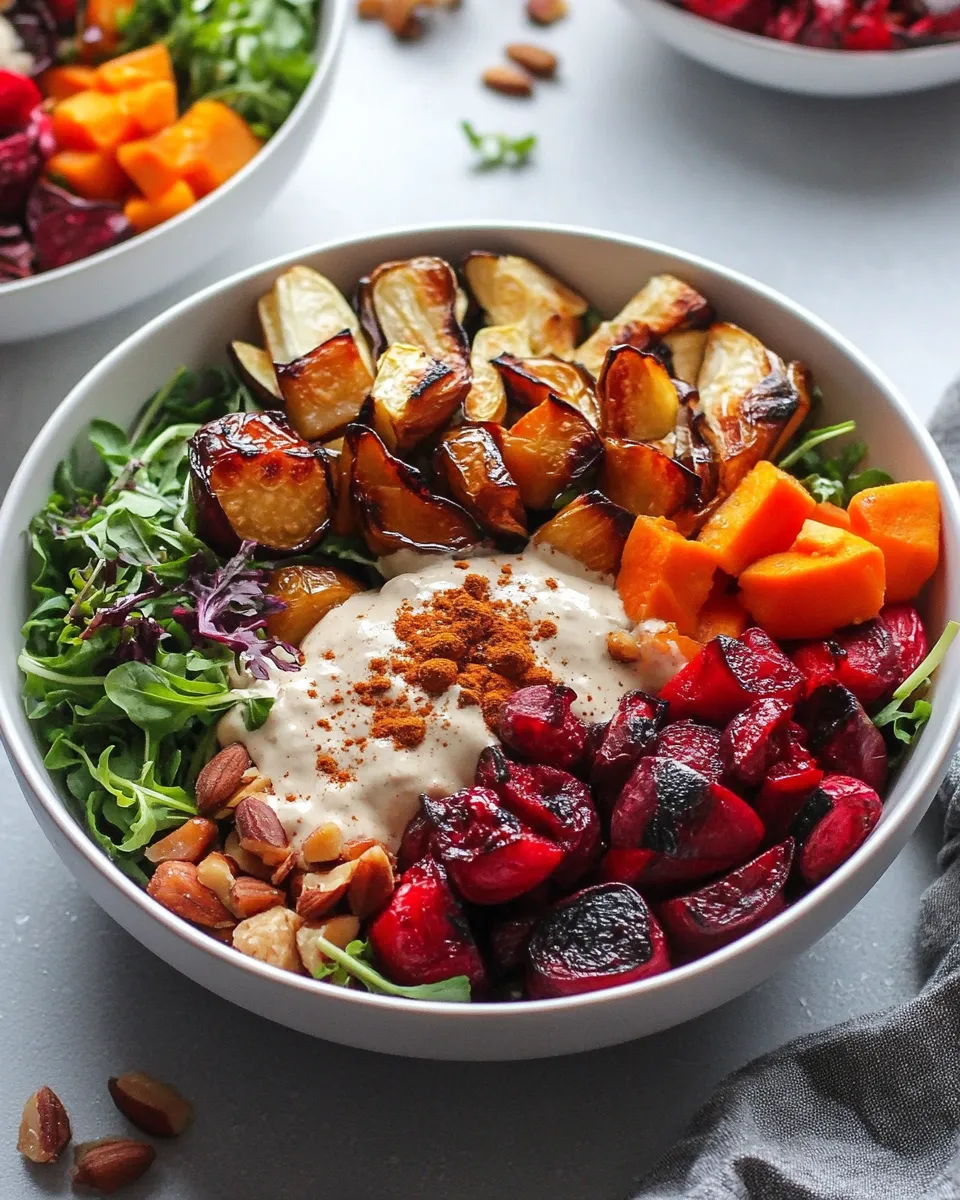
This recipe shines with its delightful combination of flavors and textures. The earthy sweetness of roasted rainbow carrots, sweet potatoes, and turnips pairs beautifully with the tangy and nutty nutmeg tahini. Add in the pop of pomegranate arils and the peppery bite of baby arugula, and you’ve got a dish that’s as pleasing to the eye as it is to the palate. Plus, it’s versatile—enjoy it warm or cold, and feel free to mix in your favorite grains or proteins.
Ingredient Notes
- 1.5 cups black rice (uncooked) – This nutty grain adds a stunning contrast to the colorful vegetables and is rich in antioxidants.
- 1 bunch rainbow carrots – These vibrant carrots not only add color but also a sweet crunch to the dish.
- 1 large turnip – A hearty root vegetable that becomes wonderfully tender when roasted.
- 1 large sweet potato – Sliced into rounds, it provides a creamy texture and natural sweetness.
- 1 (8.8-ounce) package Love Beets cooked beets – These add a burst of color and earthy flavor, making the bowls even more appealing.
- 5 ounces baby arugula – A nutritious, peppery green that balances the sweetness of the roasted vegetables.
- 1/3 cup pomegranate arils – Their juicy tartness enhances the overall flavor profile of the bowls.
- 3 tablespoons tahini – A creamy sesame paste that forms the base of the dressing.
- 1 tablespoon cider vinegar – For a touch of acidity that brightens the dish.
- 1 tablespoon pure maple syrup – A natural sweetener that complements the nutty tahini.
- 1/2 teaspoon ground cinnamon – Adds warmth and depth to the tahini dressing.
- 1/8 teaspoon ground nutmeg – Enhances the flavor of the tahini and ties the dish together.
- Pinch sea salt – To taste, enhancing all the flavors.
Toolbox for This Recipe
- Sheet Pan – Ideal for roasting the vegetables evenly.
- Medium Saucepan – For cooking the black rice to fluffy perfection.
- Mixing Bowl – To whip up the nutmeg tahini dressing.
- Whisk – For combining the ingredients for the dressing smoothly.
- Knife and Cutting Board – Essential for prepping your vegetables.
Roasted Winter Vegetable Bowls with Nutmeg Tahini in Steps
Step 1: Cook the Black Rice
Start by rinsing the black rice under cold water. In a medium saucepan, combine the rinsed rice with 3 cups of water and a pinch of salt. Bring to a boil, then reduce the heat to low, cover, and simmer for about 30-35 minutes, or until the water is absorbed and the rice is tender. Once cooked, remove from heat and let it sit covered for 5 minutes, then fluff with a fork.
Step 2: Prepare the Vegetables
While the rice is cooking, preheat your oven to 425°F (220°C). Peel and chop the rainbow carrots, turnip, and sweet potato into even-sized pieces for uniform roasting. Spread them out on a sheet pan in a single layer.
Step 3: Roast the Vegetables
Drizzle the chopped vegetables with olive oil and sprinkle with salt and pepper. Toss to coat everything evenly. Roast in the preheated oven for about 25-30 minutes, or until the vegetables are tender and slightly caramelized around the edges, flipping halfway through for even cooking.
Step 4: Make the Nutmeg Tahini Dressing
In a mixing bowl, combine the tahini, cider vinegar, maple syrup, ground cinnamon, ground nutmeg, and a pinch of sea salt. Whisk until smooth. If the dressing is too thick, add a little water until it reaches your desired consistency.
Step 5: Assemble the Bowls
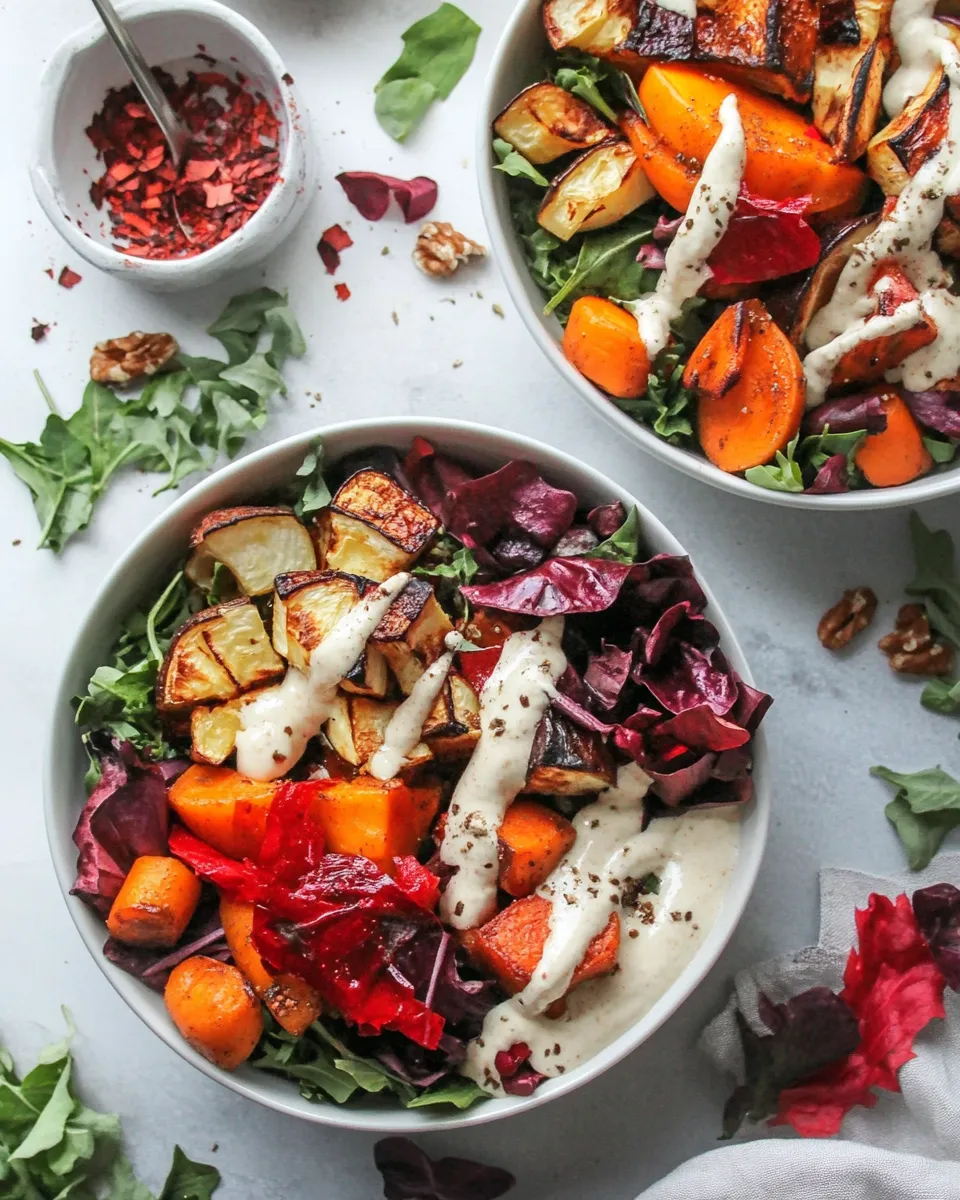
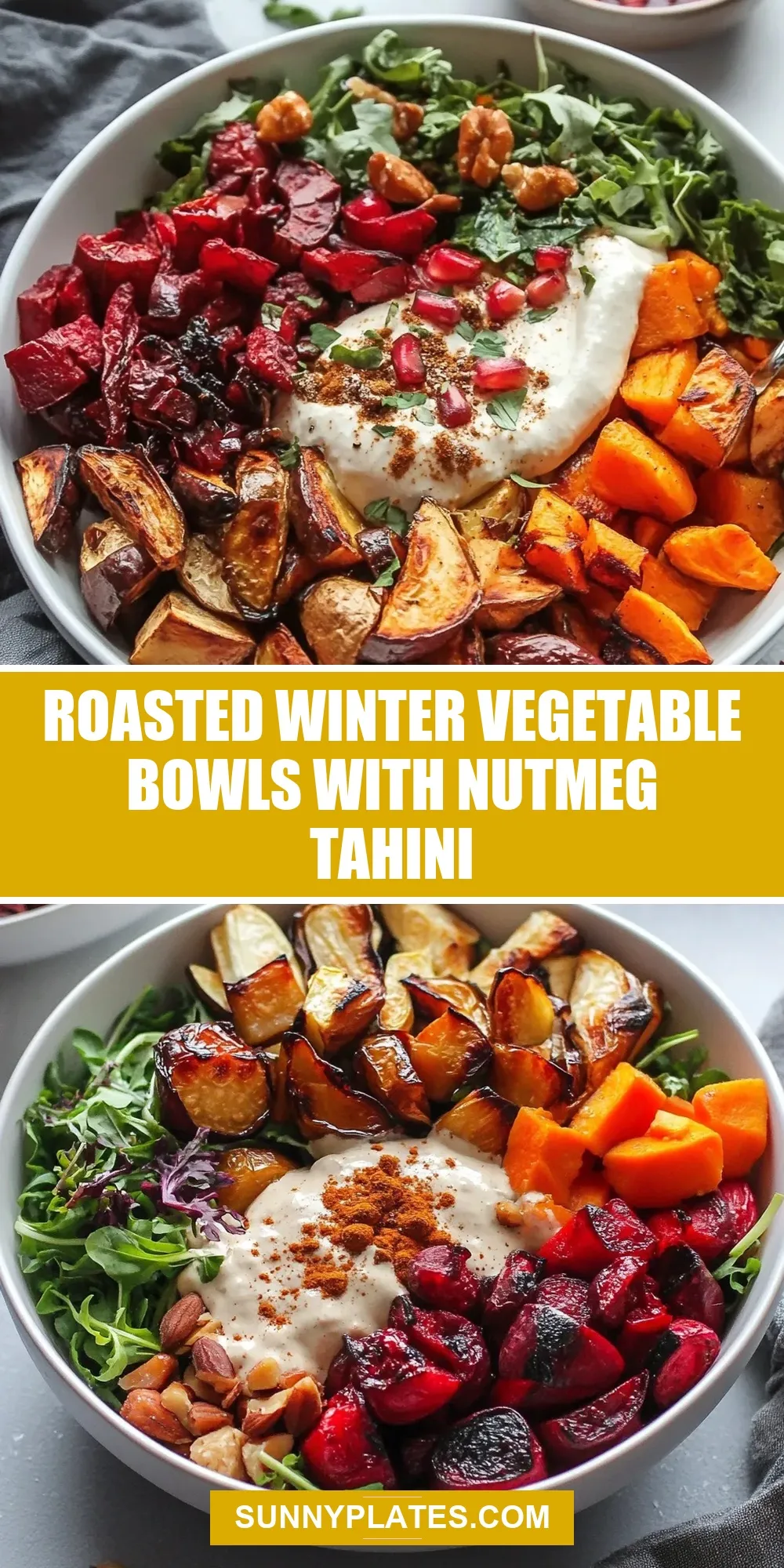
To assemble your bowls, start with a base of fluffy black rice. Top with the roasted winter vegetables, chopped Love Beets, and a handful of baby arugula. Drizzle generously with the nutmeg tahini dressing and finish with a sprinkle of pomegranate arils for a burst of flavor and color.
Smart Substitutions
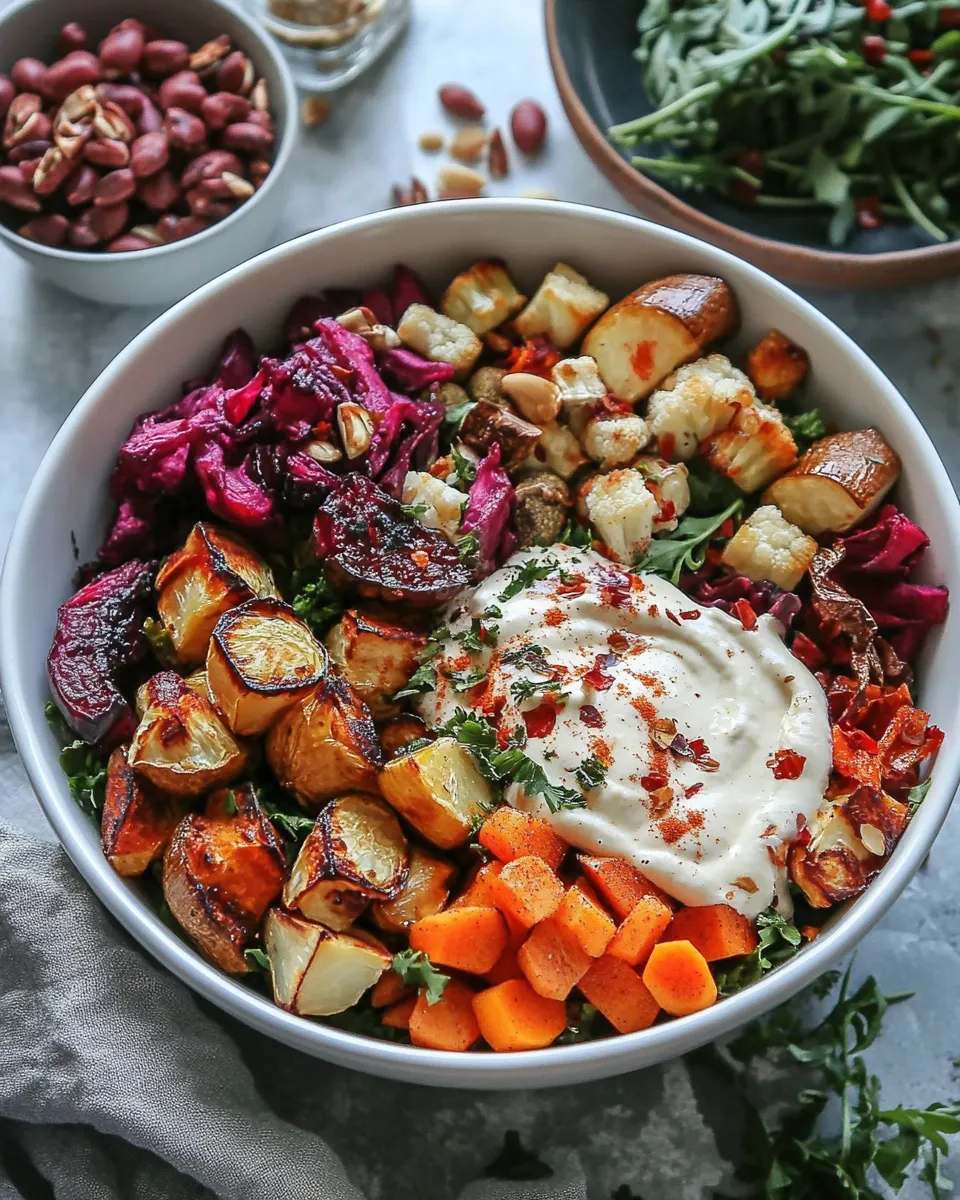
- Grains: Swap black rice for quinoa or farro for a different texture.
- Vegetables: Use any seasonal vegetables you have on hand, such as Brussels sprouts or butternut squash.
- Maple Syrup: Honey or agave can be used as alternatives to sweeten the dressing.
- Arugula: Spinach or kale are great substitutes if arugula is unavailable.
Notes on Ingredients
The combination of roasted vegetables not only makes this dish visually stunning, but it also provides a variety of nutrients. Black rice is packed with antioxidants, while the colorful vegetables are rich in vitamins and minerals. Be sure to choose fresh, firm vegetables for the best flavor and texture.
Freezer-Friendly Notes
These Roasted Winter Vegetable Bowls with Nutmeg Tahini can be made ahead and stored in the freezer for a quick meal option. Make sure to cool the roasted vegetables completely before transferring them to an airtight container. They will keep well for up to 3 months. When ready to eat, simply reheat in the oven or microwave until warmed through.
Roasted Winter Vegetable Bowls with Nutmeg Tahini Q&A
Can I add protein to these bowls?
Absolutely! Grilled chicken, chickpeas, or tofu would be excellent additions to make this dish more filling.
How can I make this recipe vegan?
This recipe is already vegan-friendly! Just ensure that the maple syrup you use is pure and not blended with other ingredients.
What if I can’t find rainbow carrots?
No worries! Regular orange carrots will work just fine. You can also experiment with different colored carrots for a fun twist.
Can I use a different dressing?
Yes! Feel free to try a balsamic vinaigrette or tahini dressing without the nutmeg for a different flavor profile.
Reader Favorites
- Harvest Farro Butternut Salad – A delightful fall-inspired dish.
- Sweet Potato Creamy Sage Pasta – A comforting pasta perfect for chilly nights.
- Mediterranean Chickpea Power Salad – A protein-packed salad bursting with flavor.
Time to Try It
Now that you have all the steps to create these delicious Roasted Winter Vegetable Bowls with Nutmeg Tahini, it’s time to get cooking! Whether you’re looking for a cozy meal to enjoy at home or a dish to impress your guests, this recipe is sure to become a favorite in your winter repertoire. Enjoy the delightful flavors and the warmth that comes from a nourishing bowl of goodness!
Share on Pinterest
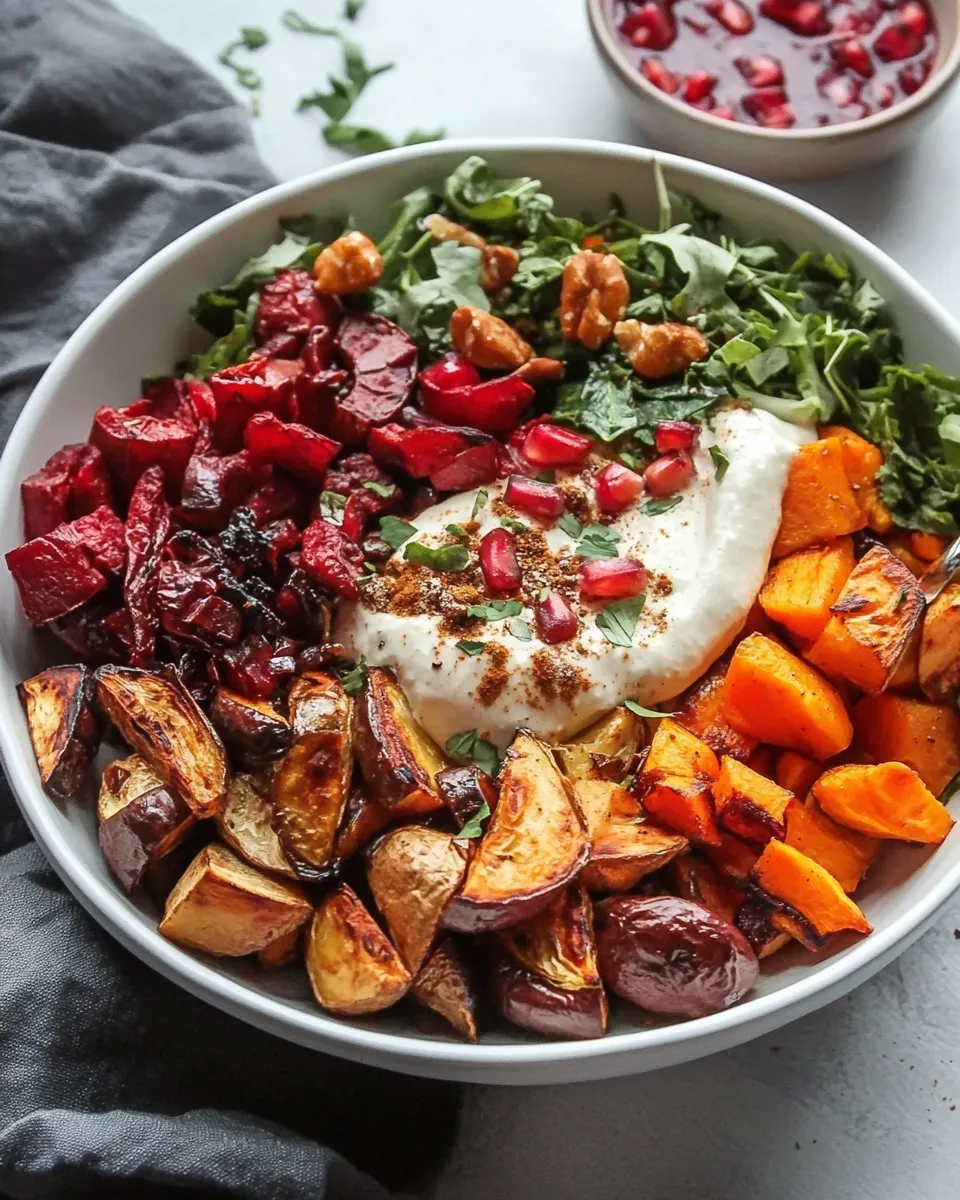
Roasted Winter Vegetable Bowls with Nutmeg Tahini
Ingredients
Equipment
Method
- Start by rinsing the black rice under cold water. In a medium saucepan, combine the rinsed rice with 3 cups of water and a pinch of salt. Bring to a boil, then reduce the heat to low, cover, and simmer for about 30-35 minutes, or until the water is absorbed and the rice is tender. Once cooked, remove from heat and let it sit covered for 5 minutes, then fluff with a fork.
- While the rice is cooking, preheat your oven to 425°F (220°C). Peel and chop the rainbow carrots, turnip, and sweet potato into even-sized pieces for uniform roasting. Spread them out on a sheet pan in a single layer.
- Drizzle the chopped vegetables with olive oil and sprinkle with salt and pepper. Toss to coat everything evenly. Roast in the preheated oven for about 25-30 minutes, or until the vegetables are tender and slightly caramelized around the edges, flipping halfway through for even cooking.
- In a mixing bowl, combine the tahini, cider vinegar, maple syrup, ground cinnamon, ground nutmeg, and a pinch of sea salt. Whisk until smooth. If the dressing is too thick, add a little water until it reaches your desired consistency.
- To assemble your bowls, start with a base of fluffy black rice. Top with the roasted winter vegetables, chopped Love Beets, and a handful of baby arugula. Drizzle generously with the nutmeg tahini dressing and finish with a sprinkle of pomegranate arils for a burst of flavor and color.
Notes
- Store leftovers in the fridge for up to 4 days.
- Freeze roasted vegetables for up to 3 months; reheat before serving.
- Feel free to substitute other grains like quinoa or farro.