Focaccia Bread Recipe
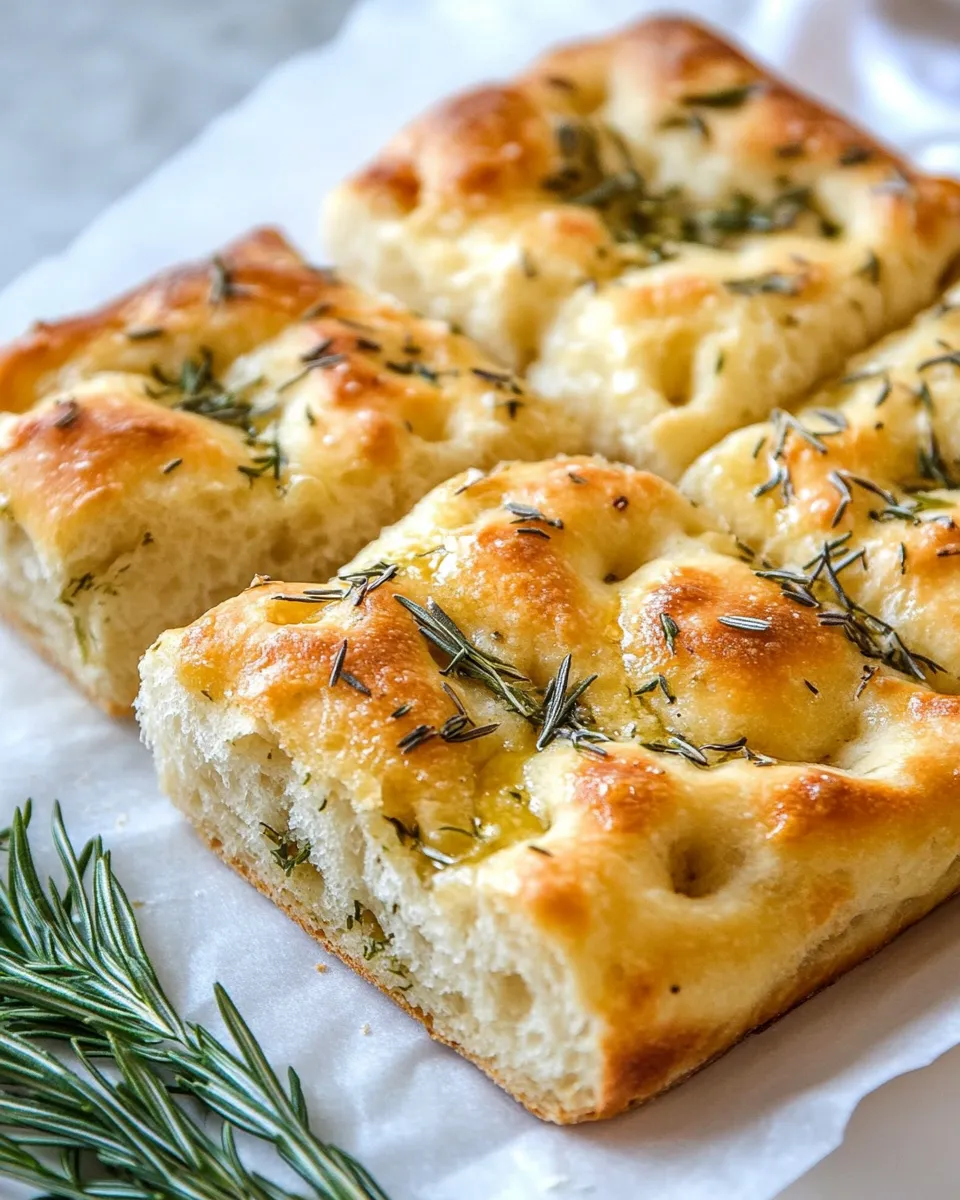
There’s something undeniably magical about homemade bread, and when it comes to effortless baking, Focaccia Bread is the star of the show. This Italian classic is not only visually stunning with its dimples and herbs but also incredibly versatile. Whether served as an appetizer, a side, or the star of a sandwich, this Focaccia Bread Recipe is sure to impress your family and friends.
The Upside of Focaccia Bread Recipe

Focaccia offers a myriad of benefits that make it a staple in many kitchens. Here are just a few reasons to love this bread:
- Simple Ingredients: With just a few pantry staples, you can create something extraordinary.
- Versatile Flavors: Customize with your favorite toppings and herbs for a unique twist every time.
- Easy Preparation: The hands-on time is minimal, allowing the dough to rise while you attend to other tasks.
- Perfect for Sharing: Its rustic appearance makes it perfect for gatherings and parties.
The Essentials
To bring this Focaccia Bread Recipe to life, you’ll need the following ingredients:
- 1 1/2 cups warm water (105-115°F)
- 1 tsp honey
- 7g instant yeast or rapid rise yeast (1 packet or 2 1/4 tsp)
- 3 3/4 cups all-purpose flour or bread flour, measured correctly
- 1 1/2 tsp salt
- 1 tbsp extra virgin olive oil, for the dough
- 1/4 cup extra virgin olive oil, for the pan
- 2 tbsp extra virgin olive oil
- 2 tbsp water
- 2 cloves garlic, minced
- 1/2 tsp salt
- 1 1/2 tsp fresh rosemary, finely chopped from 2 sprigs
- 1 tsp kosher salt or flaky salt, to sprinkle on top
Setup & Equipment
Before you begin, gather your tools to streamline the process:
- Mixing Bowl: For combining your ingredients.
- Measuring Cups and Spoons: Accurate measurements are key to perfect bread.
- Whisk or Wooden Spoon: For mixing the dough.
- Baking Sheet: Preferably rimmed, to hold the dough and toppings.
- Plastic Wrap or Towel: To cover the dough while it rises.
How to Prepare Focaccia Bread Recipe

Let’s dive into the steps that will lead you to your very own homemade Focaccia Bread.
Step 1: Activate the Yeast
In a mixing bowl, combine the warm water and honey. Sprinkle the yeast over the top and let it sit for about 5-10 minutes, until it becomes frothy. This means your yeast is active and ready to go!
Step 2: Mix the Dough
Add the flour, salt, and 1 tablespoon of olive oil to the yeast mixture. Use a whisk or a wooden spoon to combine the ingredients until a shaggy dough forms.
Step 3: Knead the Dough
Transfer the dough to a lightly floured surface and knead for about 5-7 minutes until it becomes smooth and elastic. If the dough is sticky, add a little more flour as needed.
Step 4: First Rise
Place the kneaded dough in a greased bowl, cover it with plastic wrap or a towel, and let it rise in a warm place until it doubles in size. This should take about 1-2 hours, depending on the temperature of your kitchen.
Step 5: Prepare the Pan
While the dough is rising, oil a baking sheet with 1/4 cup of extra virgin olive oil, ensuring it’s evenly coated.
Step 6: Shape the Dough
Once the dough has doubled, gently punch it down to release the air. Transfer it to the prepared baking sheet and stretch it out to fit the pan. If it springs back, let it rest for a few minutes before continuing to stretch.
Step 7: Create Dimples
Using your fingers, create deep dimples all over the surface of the dough. This not only looks beautiful but also helps to hold the toppings.
Step 8: Prepare the Topping
In a small bowl, combine the 2 tablespoons of olive oil, minced garlic, 2 tablespoons of water, and 1/2 teaspoon of salt. Brush this mixture generously over the dough, allowing it to seep into the dimples.
Step 9: Add Rosemary
Sprinkle the finely chopped rosemary over the top, and then finish with a sprinkle of kosher salt or flaky salt for added flavor.
Step 10: Second Rise
Cover the dough again and let it rise for another 30-45 minutes until puffy.
Step 11: Bake
Preheat your oven to 425°F (220°C). Once the dough has risen, bake for 20-25 minutes, or until it’s golden brown and sounds hollow when tapped on the bottom.
Step 12: Cool & Serve
Remove the Focaccia from the oven and let it cool slightly in the pan before transferring it to a wire rack. Cut into squares or strips and serve warm or at room temperature.
Spring–Summer–Fall–Winter Ideas
Focaccia can be adapted for any season! Here are some topping ideas to inspire you throughout the year:
- Spring: Fresh asparagus, lemon zest, and ricotta.
- Summer: Juicy tomatoes, basil, and mozzarella.
- Fall: Caramelized onions, goat cheese, and sage.
- Winter: Roasted garlic, thyme, and parmesan.
Pro Perspective
- Always measure your flour correctly for the best results. Spoon it into your measuring cup and level it off with a knife for accuracy.
- Experiment with different herbs and spices. Focaccia is a blank canvas waiting for your creative touch.
- For an added depth of flavor, consider using infused olive oils or adding cheese directly into the dough.
- Don’t rush the rising times. Patience is key to achieving the perfect texture.
Leftovers & Meal Prep
If you happen to have leftover Focaccia, don’t worry! It’s just as delicious the next day. Store it in an airtight container at room temperature for up to 2 days. For longer storage, wrap it tightly and freeze it for up to 3 months. To reheat, simply pop it in the oven at 350°F (175°C) for about 10-15 minutes.
Ask the Chef
Can I use whole wheat flour instead of all-purpose flour?
Yes! Whole wheat flour will give your Focaccia a nuttier flavor and denser texture. You may need to adjust the water content slightly, as whole wheat flour absorbs more moisture.
What can I use instead of rosemary?
You can substitute rosemary with other herbs like thyme, oregano, or even a blend of Italian herbs. Feel free to get creative!
How do I know when my Focaccia is done baking?
The Focaccia is done when it is golden brown on top and sounds hollow when tapped on the bottom. You can also use a thermometer; it should read around 200°F (93°C) in the center.
Can I make the dough ahead of time?
Absolutely! You can prepare the dough and let it rise, then punch it down and refrigerate it overnight. Just bring it back to room temperature before shaping and baking.
Similar Recipes
Serve & Enjoy
The beauty of homemade Focaccia is in its simplicity and the joy it brings to the table. Whether you’re dipping it in olive oil, using it to mop up sauces, or enjoying it as part of a stunning charcuterie spread, this Focaccia Bread Recipe will become a beloved staple in your baking repertoire. Now roll up your sleeves, get your hands doughy, and enjoy the delightful aroma of Focaccia filling your kitchen!

Focaccia Bread Recipe
Ingredients
Equipment
Method
- In a mixing bowl, combine the warm water and honey. Sprinkle the yeast over the top and let it sit for about 5-10 minutes, until it becomes frothy.
- Add the flour, salt, and 1 tablespoon of olive oil to the yeast mixture. Use a whisk or a wooden spoon to combine the ingredients until a shaggy dough forms.
- Transfer the dough to a lightly floured surface and knead for about 5-7 minutes until it becomes smooth and elastic.
- Place the kneaded dough in a greased bowl, cover it with plastic wrap or a towel, and let it rise in a warm place until it doubles in size (about 1-2 hours).
- While the dough is rising, oil a baking sheet with 1/4 cup of extra virgin olive oil, ensuring it’s evenly coated.
- Once the dough has doubled, gently punch it down to release the air. Transfer it to the prepared baking sheet and stretch it out to fit the pan.
- Using your fingers, create deep dimples all over the surface of the dough.
- In a small bowl, combine the 2 tablespoons of olive oil, minced garlic, 2 tablespoons of water, and 1/2 teaspoon of salt. Brush this mixture generously over the dough.
- Sprinkle the finely chopped rosemary over the top, and then finish with a sprinkle of kosher salt or flaky salt.
- Cover the dough again and let it rise for another 30-45 minutes until puffy.
- Preheat your oven to 425°F (220°C). Once the dough has risen, bake for 20-25 minutes, or until it’s golden brown.
- Remove the Focaccia from the oven and let it cool slightly in the pan before transferring it to a wire rack. Cut into squares or strips and serve warm or at room temperature.
Notes
- Always measure your flour correctly for the best results.
- Experiment with different herbs and spices.
- For added flavor, consider using infused olive oils.
- Don’t rush the rising times; patience is key.