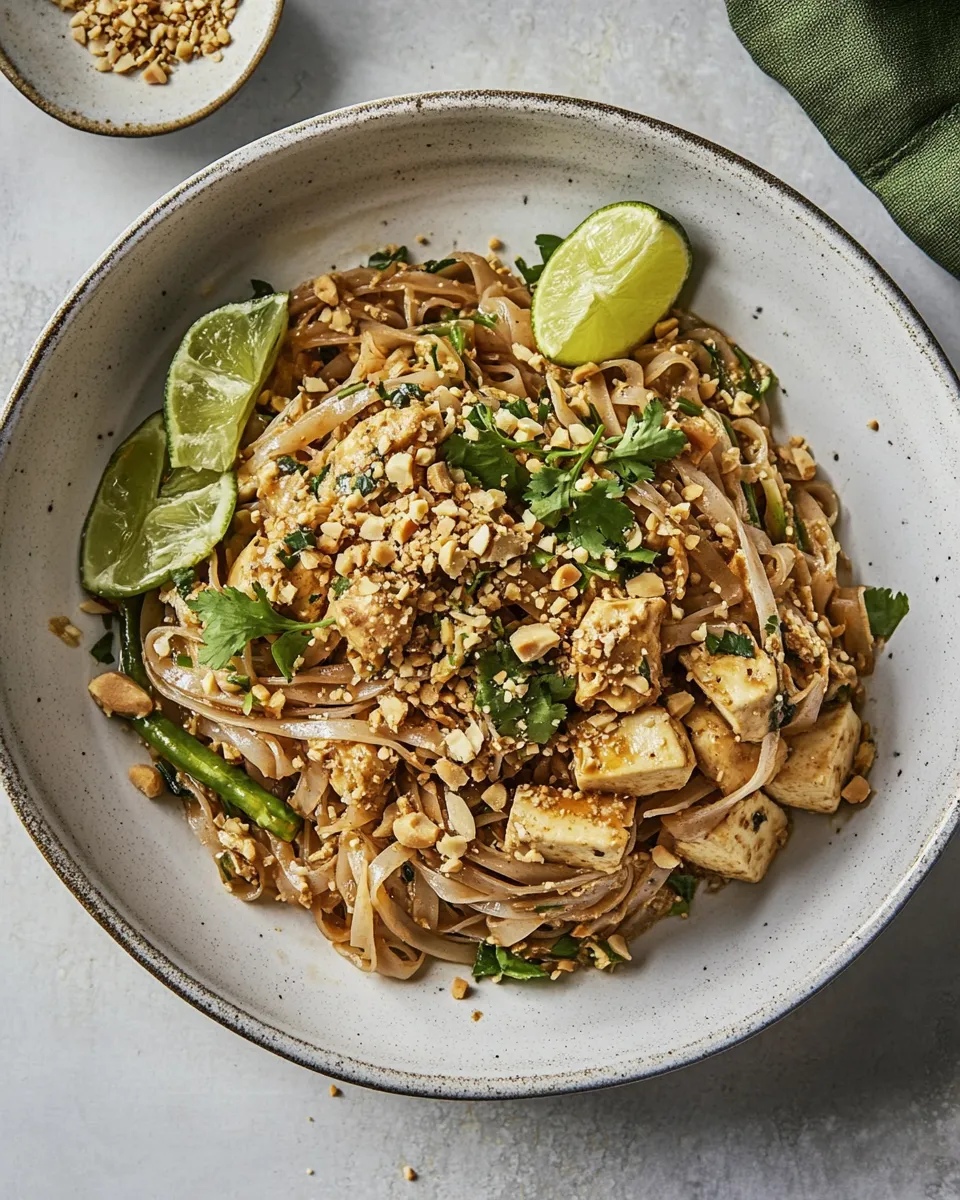
Pad Thai With Chicken & Tofu
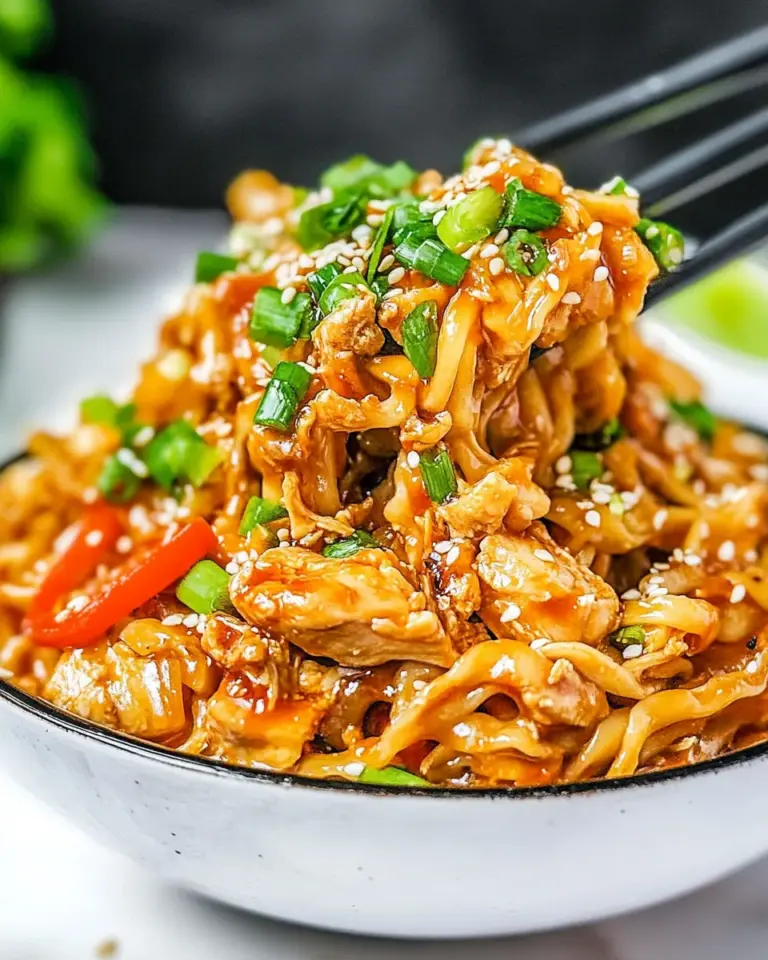
Pad Thai With Chicken & Tofu is a delightful blend of flavors that take you straight to the bustling streets of Thailand. This dish showcases a perfect harmony of savory, sweet, and tangy elements, making it an unforgettable meal to share with family and friends. With its mix of tender chicken, protein-packed tofu, and fresh vegetables, this Pad Thai recipe is not only delicious but also filling and nutritious. Let’s dive into the intricacies of creating this culinary masterpiece in your own kitchen.
What Sets This Recipe Apart
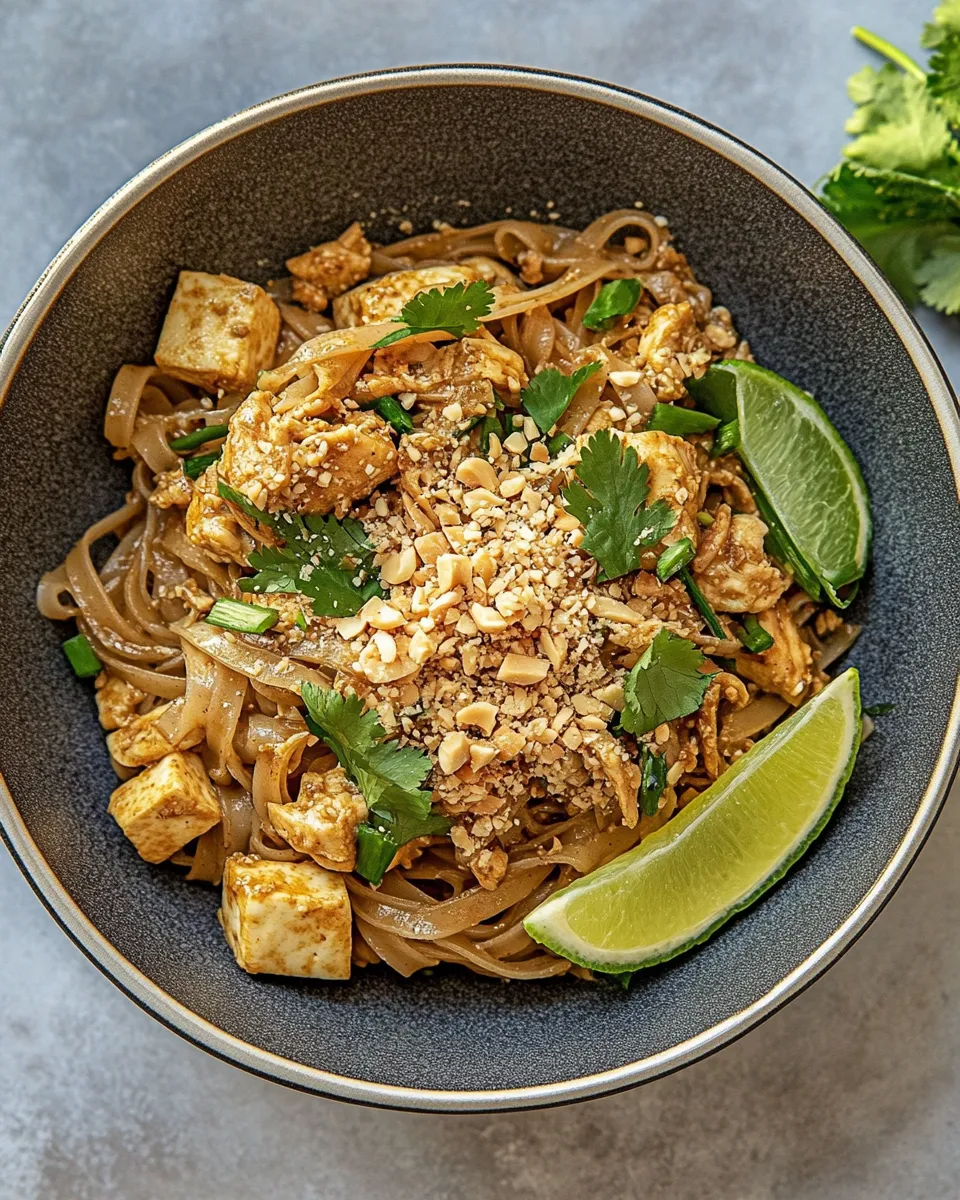
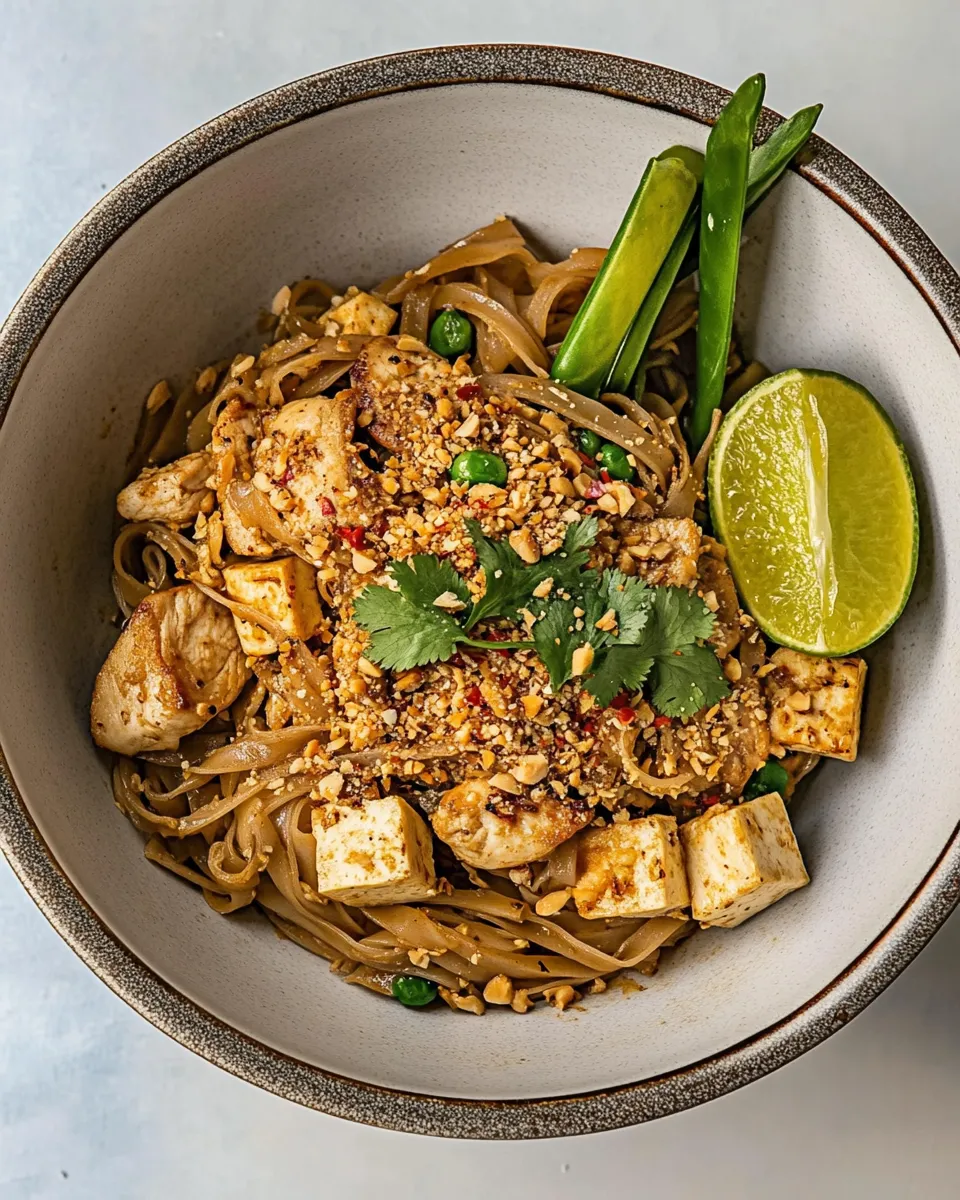
What makes this Pad Thai With Chicken & Tofu stand out is its balance of flavors and textures. The combination of tamarind puree, brown sugar, and fish sauce creates a unique sauce that coats the noodles beautifully. The addition of both chicken and tofu provides a satisfying protein duo, while the crunchy bean sprouts and roasted peanuts add a delightful crunch. This recipe captures the essence of traditional Pad Thai while being easy to prepare at home.
Ingredients at a Glance
- 7 oz rice noodles
- 2 tbsp tamarind puree
- 3 tbsp brown sugar
- 3 tbsp fish sauce
- 2 tbsp oyster sauce
- 5 tbsp vegetable oil
- 3 garlic cloves, minced
- 1 onion, sliced
- 7 oz chicken breast, minced
- 3 eggs, slightly whisked
- 2 cups bean sprouts
- 1 cup tofu, cut into small cubes
- 1 cup green onions, sliced
- 1/2 cup roasted peanuts, chopped
- Lime wedges, for serving
- Ground chili, optional
- Extra bean sprouts, for serving
Essential Tools for Success
- Large Skillet or Wok: Ideal for stir-frying the ingredients evenly.
- Pot for Boiling Noodles: A must for cooking the rice noodles to the perfect texture.
- Spatula: Useful for tossing and mixing the ingredients effortlessly.
- Measuring Cups and Spoons: Essential for precise ingredient measurements.
- Cutting Board and Knife: For slicing vegetables and proteins with ease.
Pad Thai With Chicken & Tofu, Made Easy
Step 1: Prepare the Noodles
Start by boiling water in a pot. Once the water reaches a rolling boil, add the 7 oz rice noodles. Cook according to the package instructions until they are al dente. Drain and set aside, making sure to toss them with a little oil to prevent sticking.
Step 2: Make the Sauce
In a small bowl, mix together 2 tbsp of tamarind puree, 3 tbsp of brown sugar, 3 tbsp of fish sauce, and 2 tbsp of oyster sauce. Stir until the sugar is dissolved and set this sauce aside.
Step 3: Sauté the Aromatics
In a large skillet or wok, heat 5 tbsp of vegetable oil over medium-high heat. Add 3 minced garlic cloves and 1 sliced onion. Sauté for 2-3 minutes until fragrant and the onion becomes translucent.
Step 4: Cook the Chicken and Tofu
Add 7 oz of minced chicken breast to the skillet, cooking until it is no longer pink. After the chicken is cooked, add in 1 cup of tofu cubes and stir gently to combine without breaking the tofu.
Step 5: Scramble the Eggs
Push the chicken and tofu mixture to one side of the skillet. Pour in 3 slightly whisked eggs on the other side. Allow them to cook for a minute before scrambling them into the mixture.
Step 6: Combine with Noodles
Add the cooked rice noodles to the skillet. Pour the prepared sauce over the noodles and toss everything together until well combined. Add 2 cups of bean sprouts and stir-fry for another 2-3 minutes.
Step 7: Finish with Garnishes
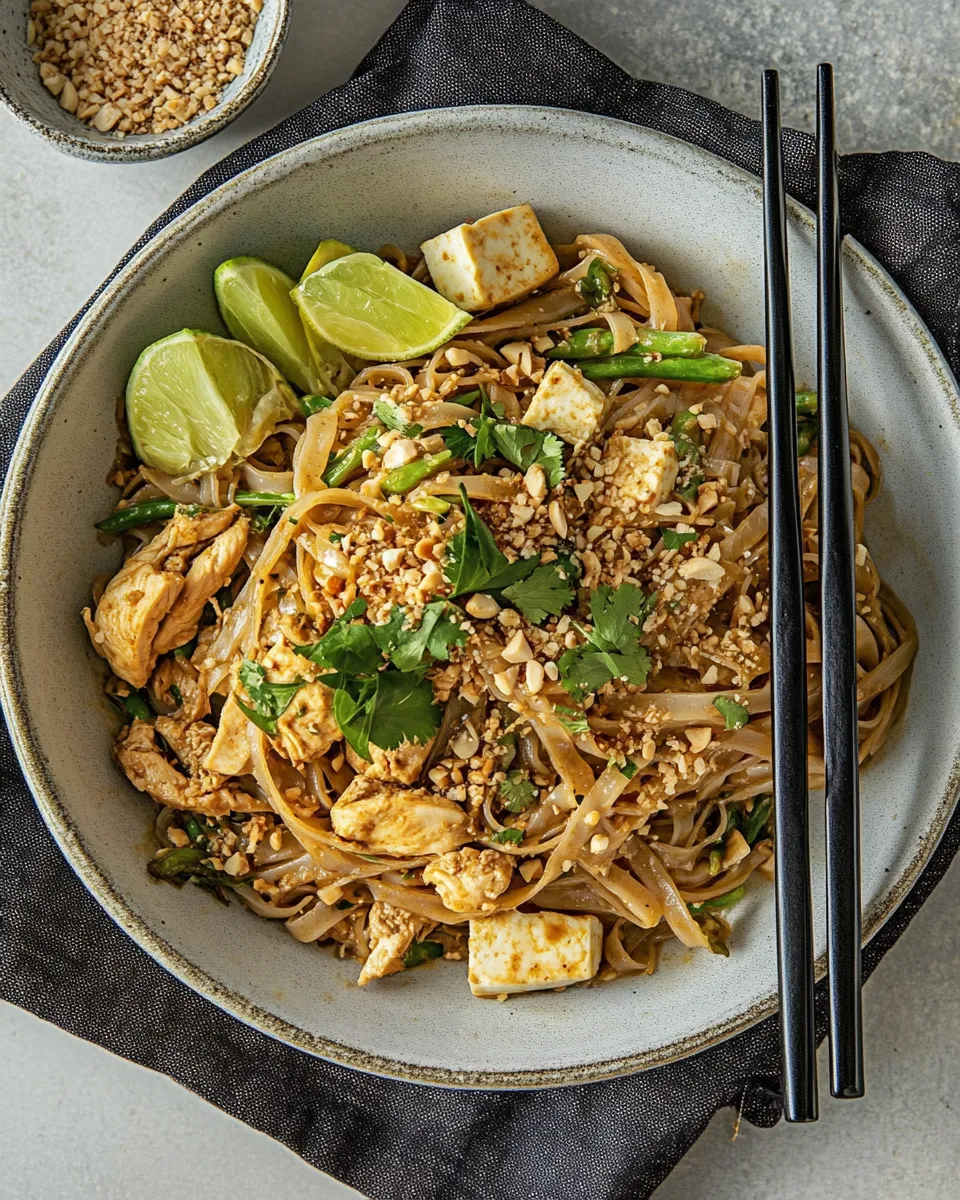
Remove the skillet from heat and add in sliced green onions and chopped roasted peanuts. Give everything a final toss. Serve hot with lime wedges and extra bean sprouts on the side. For those who like a kick, offer ground chili as an optional garnish.
Tailor It to Your Diet
- Vegetarian Option: Substitute chicken with additional tofu or seitan.
- Gluten-Free: Use gluten-free soy sauce in place of fish sauce and oyster sauce.
- Low-Carb: Replace rice noodles with zucchini noodles or shirataki noodles.
- Spicy Version: Add more ground chili or fresh chili peppers for an extra kick.
Pitfalls & How to Prevent Them
To ensure your Pad Thai With Chicken & Tofu turns out perfectly, keep these tips in mind:
- Overcooked Noodles: Be careful not to overcook the rice noodles; they should be slightly firm as they will continue cooking in the skillet.
- Burnt Garlic: Keep an eye on the garlic while sautéing. It can burn quickly, leading to a bitter taste.
- Dry Dish: If your Pad Thai seems dry, add a splash of water or broth while stir-frying to keep it moist.
- Imbalanced Sauce: Taste and adjust the sauce ingredients before adding them to the noodles to ensure the perfect flavor.
Freezer-Friendly Notes
This Pad Thai With Chicken & Tofu can be frozen for future meals. To do this, allow the dish to cool completely before portioning it into airtight freezer containers. It can be stored for up to 2 months. To reheat, simply thaw in the refrigerator overnight and reheat in a skillet over medium heat, adding a splash of water to prevent sticking.
Your Top Questions
Can I use different proteins in this Pad Thai?
Absolutely! This recipe is versatile. You can use shrimp, beef, or even skip proteins altogether for a vegetarian version.
What can I substitute for tamarind puree?
If tamarind puree is hard to find, you can use a mixture of lime juice and brown sugar as a substitute, though it will slightly alter the flavor profile.
How can I make this Pad Thai less sweet?
To reduce the sweetness, simply decrease the amount of brown sugar in the sauce and add a bit more fish sauce for a savory balance.
Can I make this Pad Thai ahead of time?
Yes, you can prepare the Pad Thai ahead of time. Just store it in the refrigerator for up to 3 days. Reheat it on the stovetop or microwave before serving.
Cook This Next
Let’s Eat
As you serve up this vibrant Pad Thai With Chicken & Tofu, take a moment to appreciate the colors and aromas that fill your kitchen. This dish is perfect for a weeknight dinner or a special gathering. It brings the heart of Thai cuisine into your home, allowing you to share a piece of your culinary journey with loved ones. Enjoy every bite, and don’t forget to squeeze that fresh lime over the top for an extra burst of flavor!
Pad Thai With Chicken & Tofu
Ingredients
Equipment
Method
- Start by boiling water in a pot. Once the water reaches a rolling boil, add the 7 oz rice noodles. Cook according to the package instructions until they are al dente. Drain and set aside, making sure to toss them with a little oil to prevent sticking.
- In a small bowl, mix together 2 tbsp of tamarind puree, 3 tbsp of brown sugar, 3 tbsp of fish sauce, and 2 tbsp of oyster sauce. Stir until the sugar is dissolved and set this sauce aside.
- In a large skillet or wok, heat 5 tbsp of vegetable oil over medium-high heat. Add 3 minced garlic cloves and 1 sliced onion. Sauté for 2-3 minutes until fragrant and the onion becomes translucent.
- Add 7 oz of minced chicken breast to the skillet, cooking until it is no longer pink. After the chicken is cooked, add in 1 cup of tofu cubes and stir gently to combine without breaking the tofu.
- Push the chicken and tofu mixture to one side of the skillet. Pour in 3 slightly whisked eggs on the other side. Allow them to cook for a minute before scrambling them into the mixture.
- Add the cooked rice noodles to the skillet. Pour the prepared sauce over the noodles and toss everything together until well combined. Add 2 cups of bean sprouts and stir-fry for another 2-3 minutes.
- Remove the skillet from heat and add in sliced green onions and chopped roasted peanuts. Give everything a final toss. Serve hot with lime wedges and extra bean sprouts on the side. For those who like a kick, offer ground chili as an optional garnish.
Notes
- For a vegetarian option, substitute chicken with additional tofu or seitan.
- Use gluten-free soy sauce in place of fish sauce and oyster sauce for a gluten-free version.
- This Pad Thai can be frozen for future meals; store in airtight containers for up to 2 months.