
Beef Tataki
If you’re on the hunt for a show-stopping appetizer that brings a taste of Japan right to your table, then look no further than Beef Tataki. This delicately seared beef dish is a perfect combination of tender meat, zesty sauces, and fresh garnishes that will leave everyone asking for seconds. With its melt-in-your-mouth texture and refreshing flavors, Beef Tataki is an elegant dish that is surprisingly simple to make at home.
Why This Recipe Belongs in Your Rotation
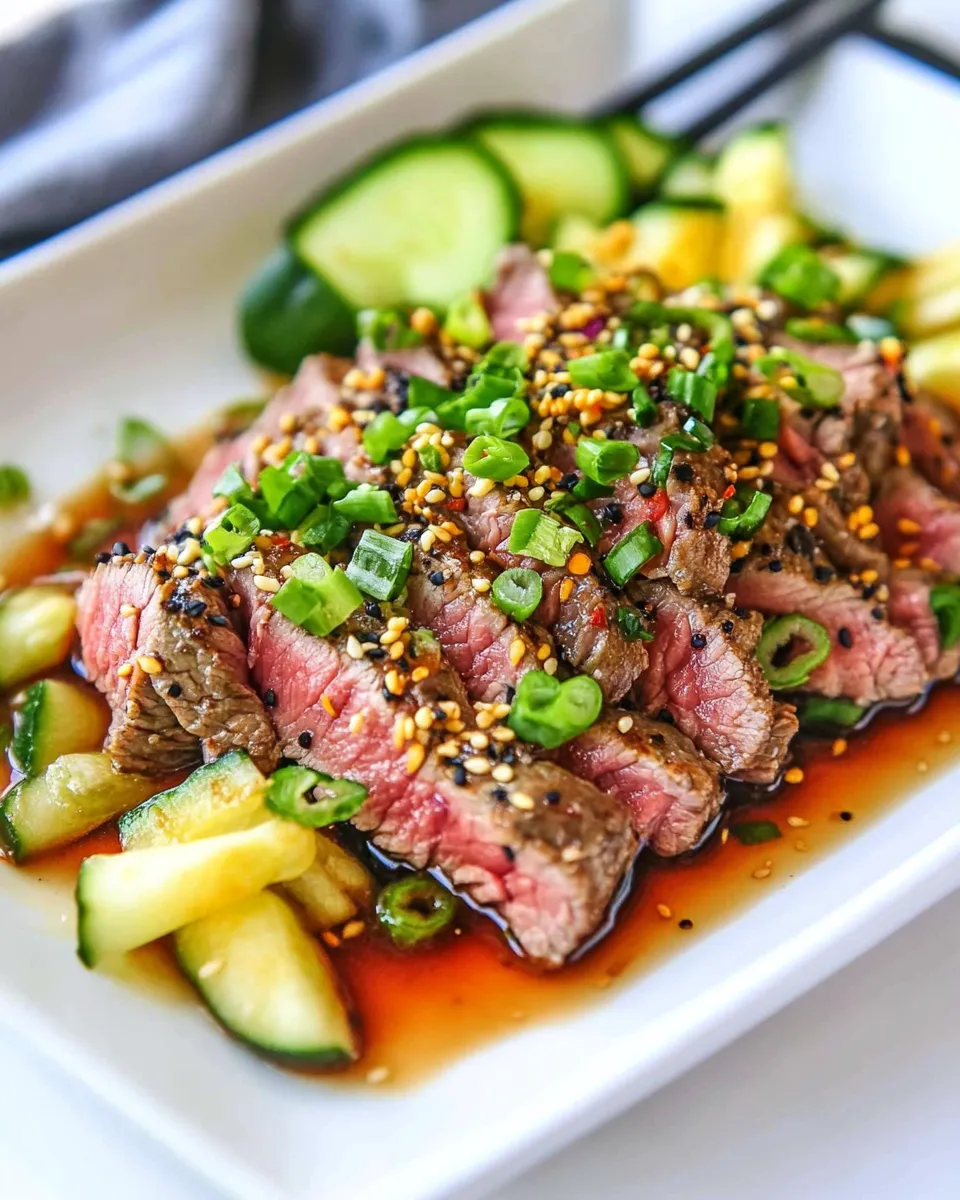
Beef Tataki is more than just a delicious dish; it’s a culinary experience. It’s a wonderful way to showcase high-quality beef, allowing the natural flavors to shine through. Perfect for entertaining, this dish can be served as an appetizer or a light main course. The vibrant colors and textures make it visually appealing, while the combination of citrus and umami flavors will tantalize your taste buds. Plus, it’s quick to prepare, making it an excellent choice for busy weeknights or special gatherings.
What We’re Using
- 1 filet mignon – Fresh, quality steak is essential for the best flavor and tenderness.
- 1/2 teaspoon salt and pepper – For seasoning the beef before searing.
- 2 tablespoons unsalted butter – Adds richness and flavor during searing.
- 2 teaspoons sesame oil – For a nutty aroma and flavor.
- 2 tablespoons lime juice – Brings brightness and acidity to the dish.
- 2 tablespoons orange juice – Adds a sweet citrus note.
- 2 teaspoons grated ginger – For a hint of warmth and spice.
- 1 tablespoon sugar – Balances the acidity in the sauce.
- 2 tablespoons soy sauce – Provides that deep umami flavor.
- 1 teaspoon Worcestershire sauce – Adds complexity to the marinade.
- 1 tablespoon scallions, minced – Freshness and crunch for garnish.
- 2 avocados, thinly sliced – Creaminess that complements the beef.
- 1/4 cup fried onions – Optional crispy topping for texture.
- 2 tablespoons scallions, minced – Additional garnish for flavor.
- 1 teaspoon coarse black pepper – For a finishing touch of spice.
Equipment Breakdown
- Cast Iron Skillet – Ideal for achieving a perfect sear on the filet mignon.
- Sharp Knife – Crucial for slicing the beef thinly after cooking.
- Cutting Board – A stable surface for slicing and preparing ingredients.
- Mixing Bowl – For combining the sauce ingredients.
- Meat Thermometer – Optional, but helpful to ensure perfect doneness.
Mastering Beef Tataki: How-To
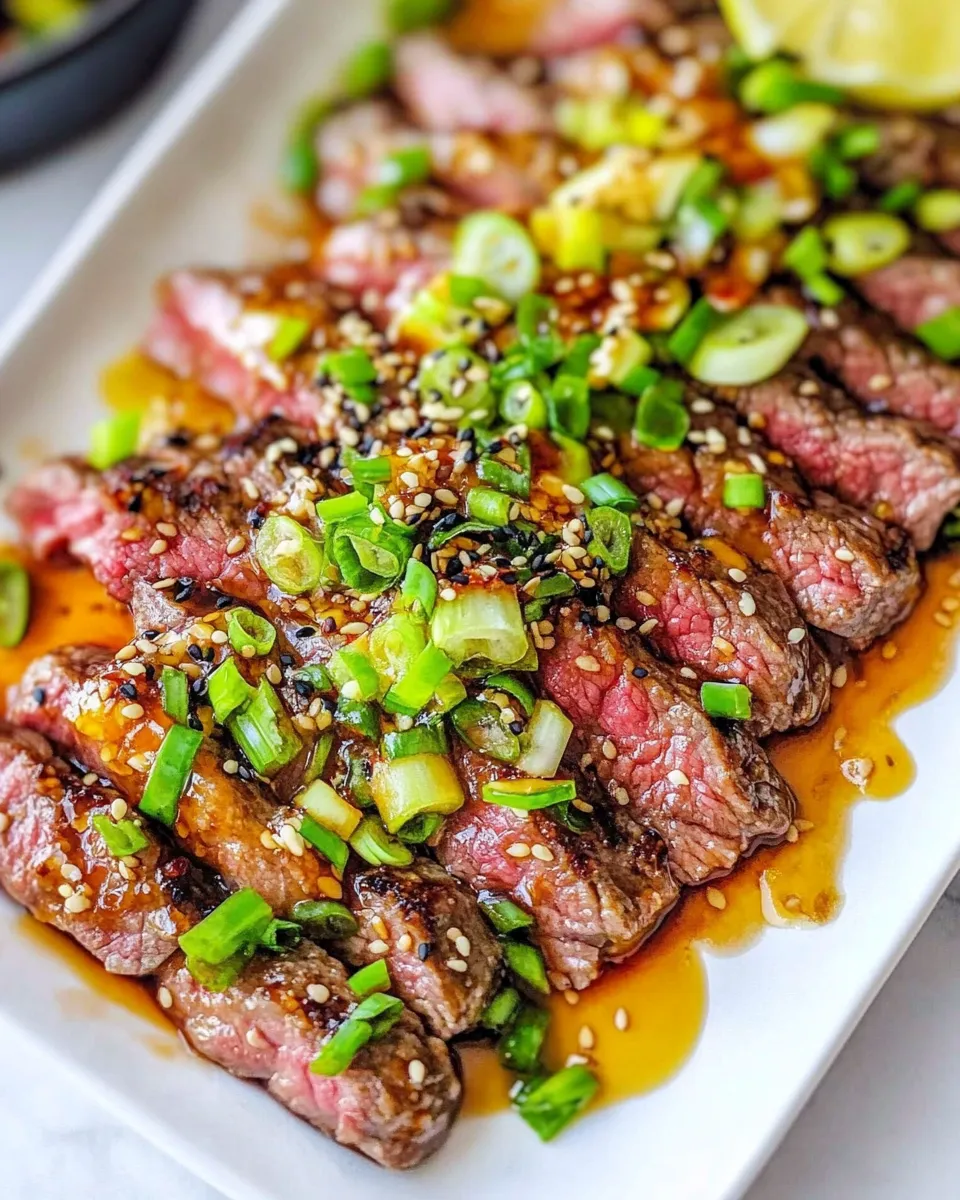
Step 1: Prepare the Marinade
In a mixing bowl, combine the lime juice, orange juice, grated ginger, sugar, soy sauce, and Worcestershire sauce. Whisk until the sugar is dissolved and the mixture is well combined.
Step 2: Season the Beef
Take your filet mignon and pat it dry with paper towels. Season generously with salt and pepper on all sides.
Step 3: Sear the Beef
In a cast iron skillet, heat the unsalted butter and sesame oil over medium-high heat until melted and bubbling. Add the filet mignon and sear for about 1-2 minutes on each side, or until a nice crust forms. For best results, check the internal temperature; aim for medium-rare (about 130°F).
Step 4: Chill the Beef
Once seared, remove the beef from the skillet and wrap it in plastic wrap. Place it in the refrigerator for at least 30 minutes to cool. This step is crucial for easier slicing.
Step 5: Slice the Beef
Once cooled, remove the beef from the refrigerator and unwrap it. Using a sharp knife, slice the beef thinly against the grain. Aim for slices that are about 1/4 inch thick for optimal tenderness.
Step 6: Assemble the Dish
On a serving platter, arrange the slices of beef tataki. Drizzle some of the prepared marinade over the top. Add the sliced avocado and sprinkle with fried onions, minced scallions, and coarse black pepper for that extra flair.
Holiday & Seasonal Touches
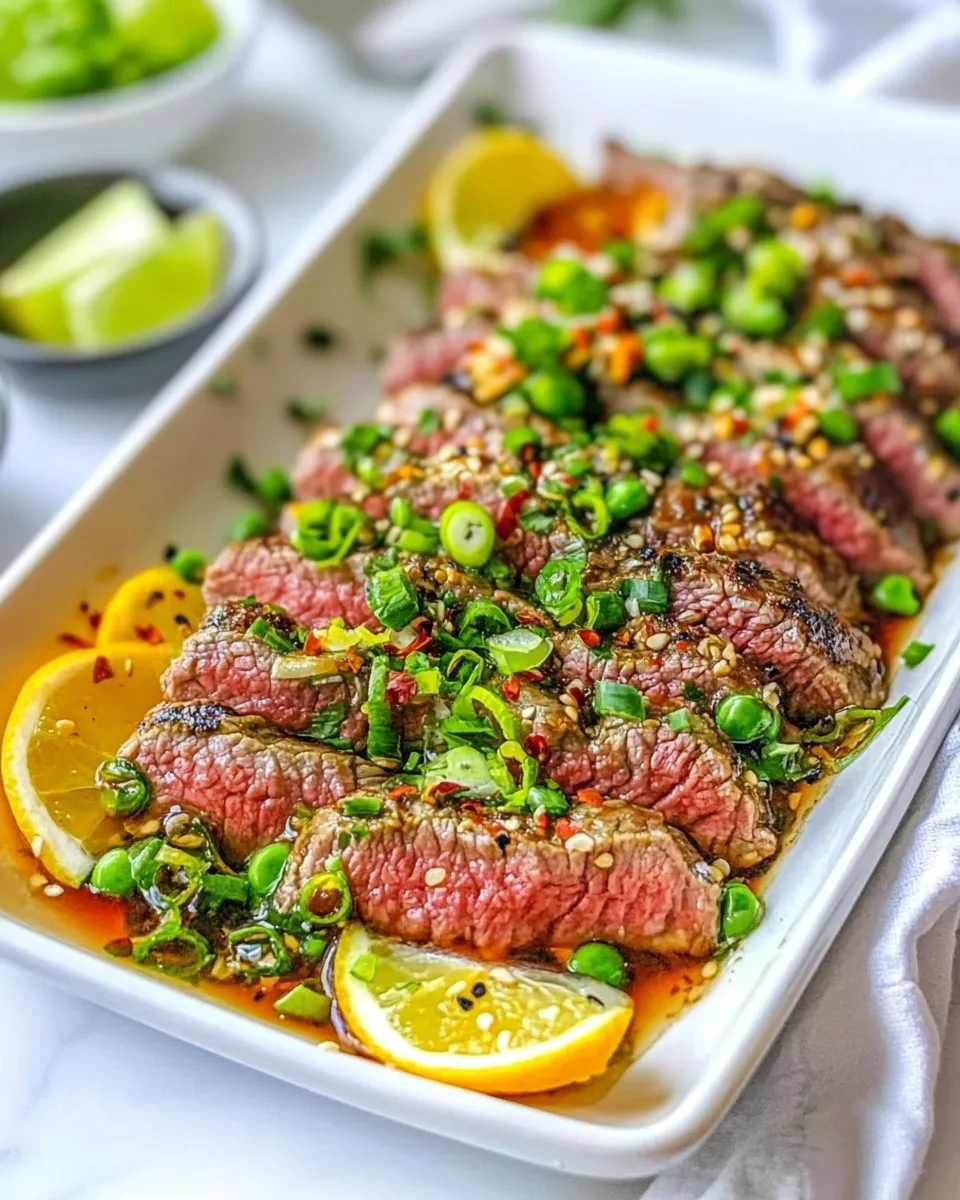
- For a festive touch, consider adding pomegranate seeds during the winter holidays for a pop of color and flavor.
- In the summer, replace the avocado with seasonal fruits like mango or peaches for a refreshing twist.
- Serve with a side of pickled vegetables for an added crunch and tang.
- For a more substantial meal, serve with a side of sushi rice or a crisp salad.
Watch Outs & How to Fix
Here are a few common pitfalls to avoid when making Beef Tataki:
- Overcooking the Beef: Keep an eye on the searing time. Remember that the beef will continue to cook slightly while it cools.
- Marinade Too Strong: If the marinade is too strong, consider diluting it with a bit of water or adding more lime juice to balance the flavors.
- Uneven Slicing: Use a sharp knife and take your time slicing the beef thinly. If it’s not uniform, the texture may vary.
- Not Chilling Long Enough: Ensure you chill the beef adequately to make slicing easier and to enhance the flavors.
Keep-It-Fresh Plan
Beef Tataki is best enjoyed fresh, but if you have leftovers, you can store them in an airtight container in the refrigerator for up to 2 days. Here are some tips to keep it fresh:
- Wrap any leftover beef tightly to prevent it from drying out.
- Store the marinade separately and drizzle it over the beef just before serving to maintain freshness.
- Avoid freezing as the texture of the beef may be compromised once thawed.
Common Qs About Beef Tataki
Can I use a different cut of beef for Tataki?
While filet mignon is the preferred choice for its tenderness, you can also use cuts like sirloin or ribeye. Just be mindful that cooking times may vary based on the thickness and fat content of the cut.
Is Beef Tataki served hot or cold?
Beef Tataki is traditionally served cold or at room temperature. This enhances the flavor and allows the beef to be sliced thinly without losing its shape.
Can I make the marinade in advance?
Absolutely! You can prepare the marinade ahead of time and store it in the refrigerator for up to a week. Just give it a good stir before using.
What can I serve with Beef Tataki?
Beef Tataki pairs wonderfully with a variety of sides like sushi rice, a simple green salad, or even some crispy tempura vegetables. Feel free to get creative!
More Recipes You’ll Love
- Sally’s Baking Addiction: Perfect Chocolate Chip Cookies
- Pinch of Yum: Creamy Garlic Pasta
- Minimalist Baker: 5-Ingredient Vegan Pancakes
- Sally’s Baking Addiction: Blueberry Muffins
Ready, Set, Cook
With its elegant presentation and bold flavors, Beef Tataki is a delightful dish that is sure to impress your family and friends. It’s a testament to the beauty of simplicity in cooking, allowing quality ingredients to take center stage. So gather your ingredients, fire up that skillet, and get ready to savor every bite of this exquisite dish. Enjoy your culinary adventure with Beef Tataki!
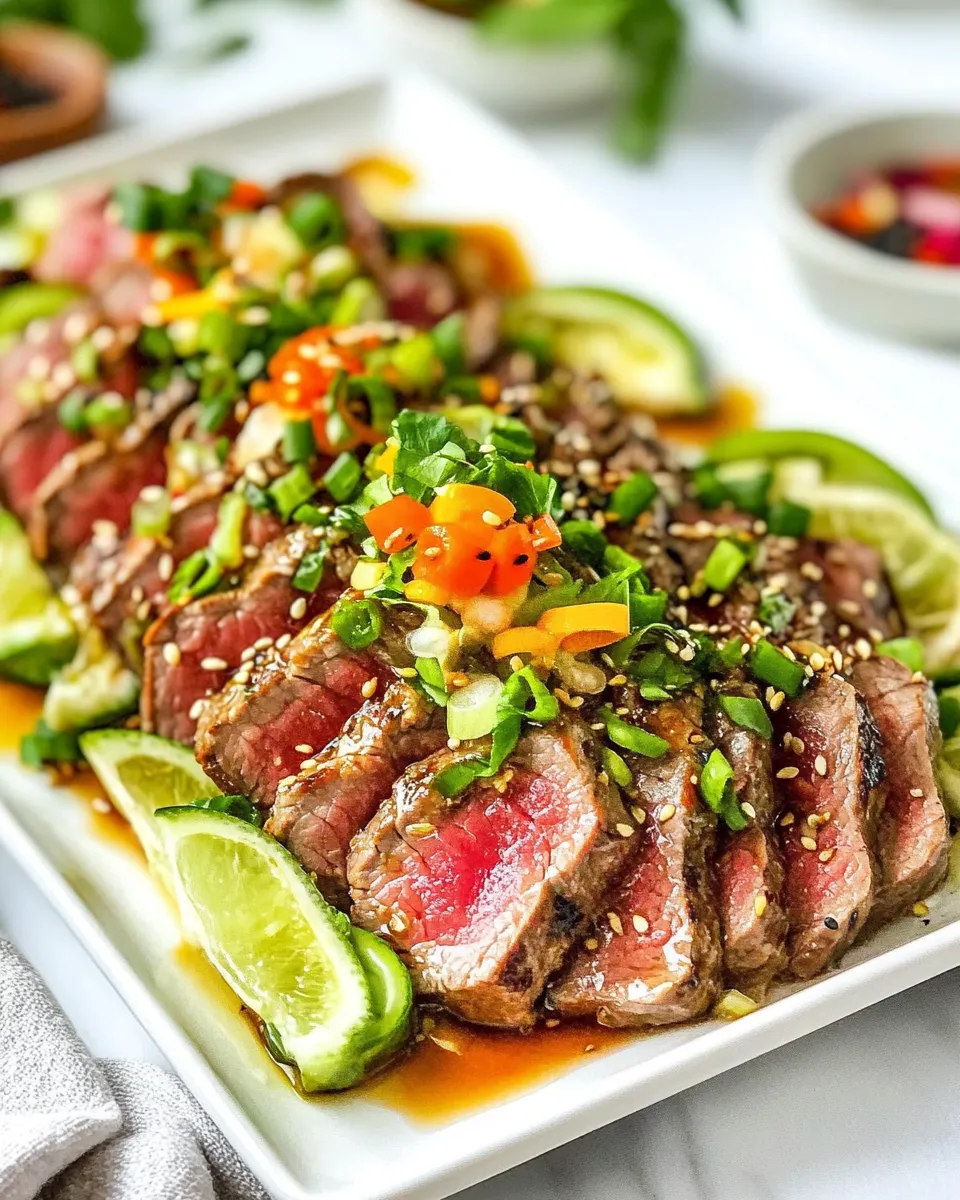
Beef Tataki
Ingredients
Equipment
Method
- Step 1: Prepare the Marinade - In a mixing bowl, combine the lime juice, orange juice, grated ginger, sugar, soy sauce, and Worcestershire sauce. Whisk until the sugar is dissolved and the mixture is well combined.
- Step 2: Season the Beef - Take your filet mignon and pat it dry with paper towels. Season generously with salt and pepper on all sides.
- Step 3: Sear the Beef - In a cast iron skillet, heat the unsalted butter and sesame oil over medium-high heat until melted and bubbling. Add the filet mignon and sear for about 1-2 minutes on each side, or until a nice crust forms. For best results, check the internal temperature; aim for medium-rare (about 130°F).
- Step 4: Chill the Beef - Once seared, remove the beef from the skillet and wrap it in plastic wrap. Place it in the refrigerator for at least 30 minutes to cool. This step is crucial for easier slicing.
- Step 5: Slice the Beef - Once cooled, remove the beef from the refrigerator and unwrap it. Using a sharp knife, slice the beef thinly against the grain. Aim for slices that are about 1/4 inch thick for optimal tenderness.
- Step 6: Assemble the Dish - On a serving platter, arrange the slices of beef tataki. Drizzle some of the prepared marinade over the top. Add the sliced avocado and sprinkle with fried onions, minced scallions, and coarse black pepper for that extra flair.
Notes
- Beef Tataki is best enjoyed fresh, but can be stored in an airtight container in the refrigerator for up to 2 days.
- Wrap any leftover beef tightly to prevent it from drying out.
- Store the marinade separately and drizzle it over the beef just before serving to maintain freshness.